Multi Meter
Multi Meter

Frequently Asked Questions
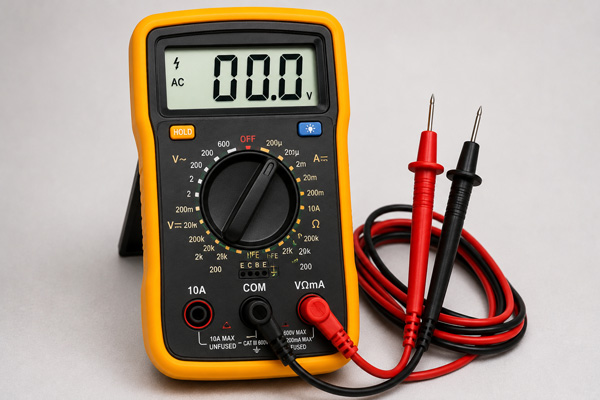
A multimeter combines several measurement functions, such as voltage, current, resistance, and often continuity or diode testing, into a single handheld device, allowing technicians to diagnose a wide range of electrical issues with just one tool.
An analog multimeter uses a needle moving across a scale to display readings, while a digital multimeter shows exact numerical values on an LCD screen, generally offering greater precision and easier interpretation for modern diagnostic work.
Multimeters are rated by CAT (Category) ratings such as CAT II, CAT III, or CAT IV, which indicate the level of transient voltage protection suitable for different environments, from household outlets to industrial distribution systems.
Yes, most multimeters include a continuity testing function that emits an audible beep when a complete, low-resistance path is detected, making it quick and easy to check wires, fuses, and connections for breaks.
Higher-end multimeters may include features like capacitance measurement, frequency testing, temperature probes, true RMS readings, and data-hold or logging functions for more detailed diagnostic and troubleshooting work.
Internal fuses protect the meter's circuitry from damage if it's accidentally connected incorrectly or exposed to excess current, making properly rated and intact fuses essential for both instrument longevity and user safety.
Yes, depending on its voltage range and CAT rating, a multimeter can be used for simple household troubleshooting as well as more demanding industrial panel diagnostics, motor testing, and control circuit checks.
Yes, we supply multimeters in bulk to electrical contractors, panel manufacturers, OEMs, and industrial buyers across Gujarat and India, including export orders. For pricing and details, contact us at +91 90237 59007, +91 81405 50607, or shreeshivaelectric@gmail.com.