Clamp Meter
Clamp Meter

Frequently Asked Questions
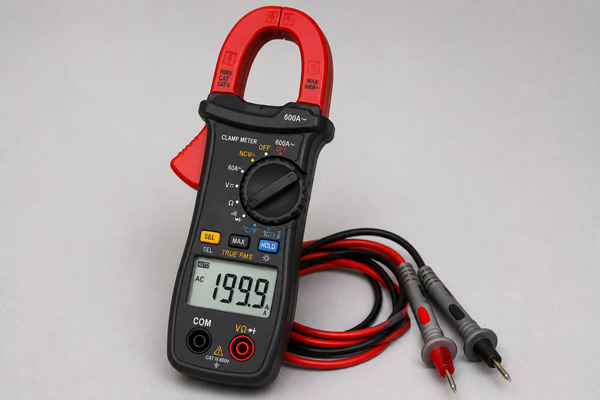
A clamp meter measures electrical current by simply clamping its jaws around a conductor, using the surrounding magnetic field to calculate current flow without breaking the circuit or making direct contact with bare wires.
It uses a built-in current transformer or Hall effect sensor inside the jaw mechanism, which senses the magnetic field generated by current flowing through the wire and converts it into a corresponding readable value.
Since it doesn't require disconnecting or breaking the circuit to take a reading, a clamp meter reduces the risk of electric shock and arc flash exposure, making it a safer choice for live-circuit measurements.
Yes, most modern clamp meters come with integrated test leads and functions that allow them to measure voltage, resistance, and continuity, effectively combining clamp-based current sensing with standard multimeter capabilities.
An AC-only clamp meter provides accurate readings for clean sinusoidal waveforms, while a True RMS clamp meter delivers precise measurements even on distorted or non-linear loads, making it better suited for modern variable-frequency drives and electronic equipment.
The jaw size should be large enough to comfortably fit around the intended cable or busbar, so checking the maximum conductor diameter in the application ensures the clamp meter can be used effectively without obstruction.
Yes, many clamp meters are designed with wide current ranges specifically to handle heavy industrial loads, making them ideal for motor testing, panel diagnostics, and power distribution troubleshooting without disconnecting the load.
Yes, we supply clamp meters in bulk to electrical contractors, panel manufacturers, OEMs, and industrial buyers across Gujarat and India, including export orders. For pricing and details, contact us at +91 90237 59007, +91 81405 50607, or shreeshivaelectric@gmail.com.