MCB

Frequently Asked Questions
An MCB is a protective switching device that automatically disconnects the circuit when it detects an overload or short circuit, safeguarding wiring, connected equipment, and personnel from potential electrical damage or fire hazards.
Unlike a fuse, which must be physically replaced after it blows, an MCB can simply be reset by flipping its switch back on after the fault is cleared, making it more convenient and reusable for repeated protection.
These curves define how quickly the MCB trips relative to the fault current multiple, with Type B suited for resistive loads, Type C for moderate inductive loads, and Type D for equipment with high inrush currents like motors.
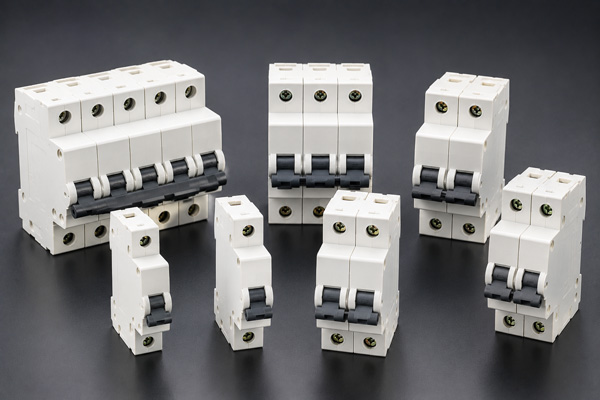
MCBs are available in single-pole, double-pole, triple-pole, and four-pole configurations, allowing them to protect single-phase or three-phase circuits depending on the specific wiring and load requirements.
They are commonly available in ratings ranging from 6A up to 63A or higher, allowing selection based on the specific load current the protected circuit is expected to carry.
The breaking capacity indicates the maximum fault current the MCB can safely interrupt without damage, and selecting one with insufficient capacity for the installation's fault level can result in equipment failure during a severe short circuit.
Most MCBs are designed to standard DIN rail dimensions, allowing them to mount on generic DIN rails, though internal replacement parts and accessories are typically brand-specific.
Yes, we supply MCBs in bulk to panel manufacturers, switchgear assemblers, OEMs, and industrial buyers across Gujarat and India, including export orders. For pricing and details, contact us at +91 90237 59007, +91 81405 50607, or shreeshivaelectric@gmail.com.